Maximizing Growth: Why Polish and Romanian Startups Are Expanding to the US
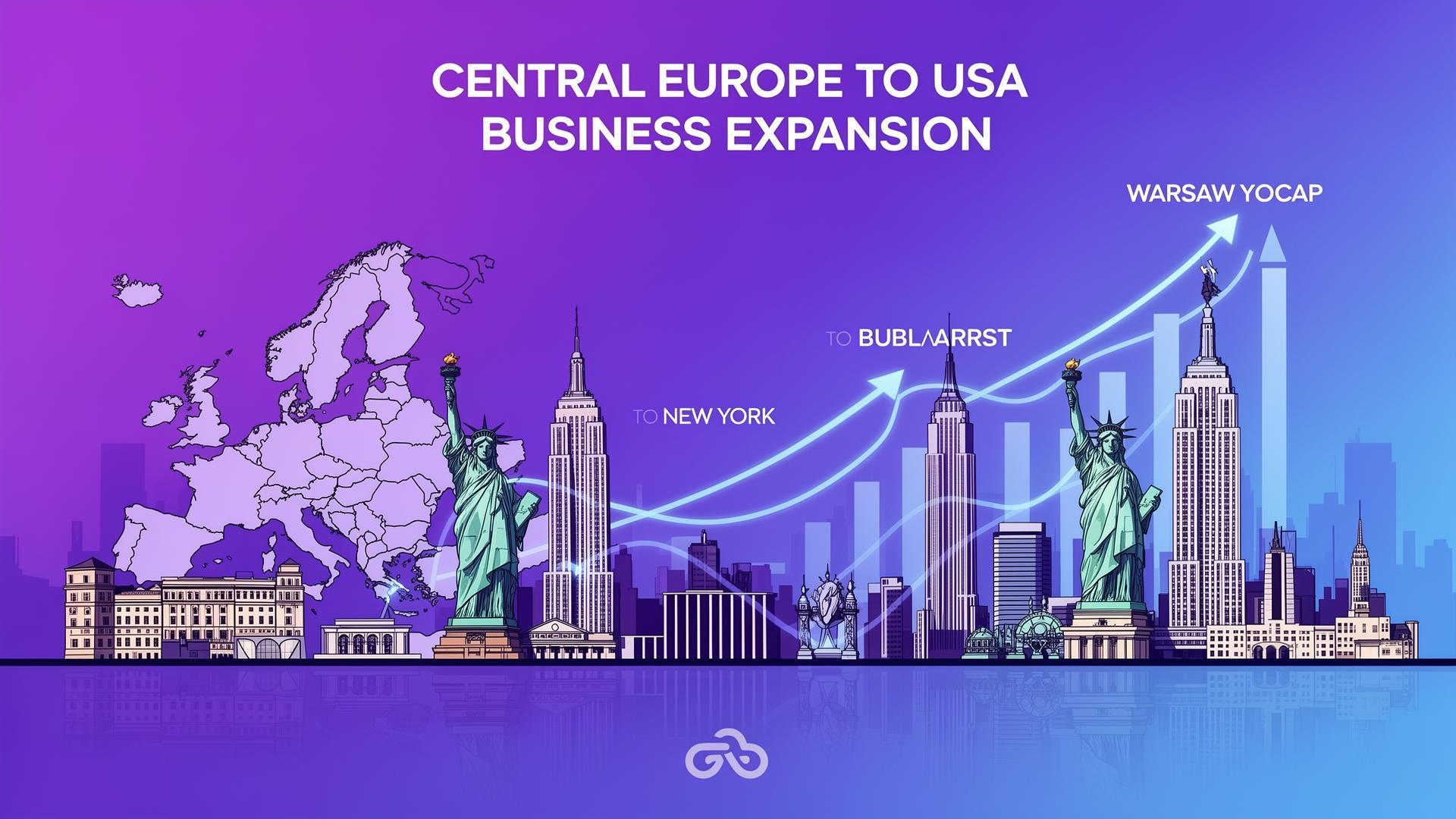
Central Europe has quietly emerged as one of the world's most dynamic startup ecosystems, and founders in Poland and Romania are increasingly setting their sights on the American market. For most of them the practical first step is not relocating — it is forming a US LLC as a non-resident EU founder. This guide keeps the Central European growth story in view but focuses on the concrete mechanics: choosing a US LLC over a local entity, getting an EIN without an SSN, and opening US banking and Stripe from Warsaw or Bucharest.
The Central European Advantage
Startups from Poland and Romania enter the global stage with distinct competitive advantages forged in the demanding environment of emerging markets. These founders have built businesses under constraints that breed efficiency, creativity, and resilience—qualities that translate well to the competitive American landscape.
Technical Excellence at Scale
Both Poland and Romania have invested heavily in technical education, and their universities are widely recognized for producing large numbers of strong engineering and computer science graduates each year. This deep talent pool enables Central European startups to build sophisticated products at competitive costs.
Cost efficiency without compromising quality allows Central European founders to extend runway and iterate faster than competitors in higher-cost markets. This efficiency becomes a strategic asset when entering the US market, where operational costs are significantly higher.
Battle-Tested Business Models
Building successful companies in Central Europe requires navigating complex regulatory environments, limited local venture capital, and smaller domestic markets. Founders who succeed in these conditions develop robust business models and operational discipline that serve them well in larger markets.
Why the US Market?
Market Size and Growth Potential
The US market offers scale that simply isn't available in Central Europe. A B2B SaaS company that has saturated the Polish market might have reached a few thousand potential customers; the same product category in the US could address millions of businesses.
Pricing power in the US market often exceeds Central European levels by multiples. Products that command modest prices in Warsaw or Bucharest can often achieve significantly higher price points in San Francisco or New York, dramatically improving unit economics.
Access to Capital
While Central European venture capital has grown substantially, the US remains the global leader in startup funding. American investors typically write larger checks and are more experienced with high-growth technology companies. For startups seeking significant growth capital, US presence often becomes essential.
Talent and Partnerships
A US presence opens doors to American talent for key roles, particularly in sales, marketing, and business development—areas where local market knowledge provides significant advantages. It also facilitates partnerships with US companies that prefer working with domestically registered entities.
Success Stories and Patterns
The path from Central European startup to US market success follows recognizable patterns. Companies like Brainly (Poland's edtech unicorn), UiPath (Romania's automation giant), and numerous others have demonstrated that Central European origins are no barrier to global leadership.
Common Success Factors
- Product-market fit first: Successful expanders typically validate product-market fit in their home region before investing in US expansion
- Strategic entity structure: Most establish Delaware C-Corps or LLCs to align with US investor expectations and operational requirements
- Local leadership: Hiring experienced US-based executives, particularly for sales and customer success, accelerates market entry
- Maintained operational core: Engineering and product development often remain in Central Europe, leveraging cost advantages and talent depth
Forming a US LLC as a Non-Resident EU Founder
For a Polish or Romanian founder, the most common entry point to the US market is not a relocation or a venture-backed C-Corp — it is a single-member US LLC formed remotely while you stay an EU resident. You do not need a US visa, a US address of your own, or US citizenship to own one. The LLC simply gives you a US-registered business that American customers, payment processors and banks can work with.
US LLC vs a Local Polish or Romanian Entity
A sp. z o.o. in Poland or an SRL in Romania is the right home base for serving local clients, but it can create friction when your buyers and platforms are American. A US LLC sits closer to US customers, is instantly recognizable to US-based partners, and unlocks US payment rails. Many Central European founders keep their local company for EU operations and add a US LLC purely as the contracting and payments layer for the American market. Which structure is most efficient for you depends on your specific tax residency and activity, so confirm the setup with a qualified cross-border tax advisor before you commit.
Getting an EIN Without an SSN
Every US LLC needs an Employer Identification Number (EIN) from the IRS to open banking and file returns. As a non-resident founder you typically will not have a US Social Security Number, but you do not need one: the EIN is obtained by filing Form SS-4 with the IRS via the non-resident path (by fax or mail rather than the online tool). This step usually takes a few weeks and is the gateway to everything that follows.
US Banking and Stripe From Central Europe
Once the LLC and EIN are in place, founders generally open a US business account with a remote-friendly provider such as Mercury or Wise, then connect Stripe to bill US customers in dollars. Stripe and US banks can serve a properly formed non-resident LLC, but approval always sits with each provider's own compliance review and is never guaranteed in advance — a well-recognized formation state and a clean EIN make remote onboarding smoother. The combination of a US LLC, an EIN, US banking and Stripe is what lets a Warsaw- or Bucharest-based founder operate as a US business without leaving Europe.
The Expansion Playbook
Phase 1: Foundation Building
The initial phase focuses on establishing legal and financial infrastructure. This includes:
- Entity formation (typically Delaware C-Corp for venture-backed companies)
- US banking relationships
- Basic US presence (registered agent, virtual office)
- Initial IP and contract structure review
Phase 2: Market Entry
With infrastructure in place, focus shifts to market penetration:
- Hiring initial US team members (often starting with sales)
- Adapting messaging and positioning for American audiences
- Building reference customers in the US market
- Establishing partnerships and channel relationships
Phase 3: Scale Operations
As traction develops, companies expand their US footprint:
- Growing US team across functions
- Potentially relocating founders or key executives
- Pursuing US-based funding rounds
- Building toward US market leadership position
Challenges and Considerations
Cultural Adaptation
American business culture differs from Central European norms in ways that can trip up unprepared founders. Sales processes tend to be faster and more direct. Customer expectations for responsiveness and service levels are often higher. Marketing requires more assertive positioning than many European founders find comfortable.
Operational Complexity
Managing operations across two continents introduces complexity in areas including:
- Time zone coordination (6-9 hour differences)
- Multi-currency financial management
- Cross-border employment and tax considerations
- Maintaining cultural cohesion across distributed teams
Resource Allocation
US expansion requires significant investment. Founders must carefully balance resources between maintaining momentum in existing markets and building presence in the US. Premature or under-resourced expansion can stretch organizations too thin.
The Future of Central European Expansion
The trend of Central European startups expanding to the US shows no signs of slowing. As success stories multiply and the playbook becomes better understood, more founders are incorporating US expansion into their strategic planning from earlier stages.
For Polish and Romanian startups with global ambitions, the question is increasingly not whether to expand to the US, but when and how. Those who approach this expansion strategically—with proper infrastructure, adequate resources, and realistic timelines—are positioning themselves to compete on the world's largest and most competitive business stage.
Polish & Romanian Founders, US LLC — FAQ
Can a Polish or Romanian founder open a US LLC without living in the US?
Yes. A US LLC can be owned by a non-resident EU founder with no US visa, no US citizenship and no US residency. You stay a Polish or Romanian resident and own the LLC remotely; you do not need to move to the United States to form or run it.
Do I need an EIN, and can I get one without an SSN?
Every US LLC needs an EIN from the IRS to open banking and file returns, and you can obtain one without a US Social Security Number. As a non-resident you file Form SS-4 with the IRS by fax or mail (the non-resident path) rather than the online tool. It usually takes a few weeks.
Should I form a US LLC or a local Polish/Romanian entity?
It depends on where your customers and platforms are. A local sp. z o.o. or SRL fits EU operations, while a US LLC sits closer to American customers and US payment rails. Many founders keep their local company and add a US LLC purely as the US contracting and payments layer. Confirm the most efficient structure with a qualified cross-border tax advisor before deciding.
Can a non-resident US LLC use Stripe and open US banking remotely?
Generally yes. With a formed LLC and an EIN, founders typically open a remote-friendly US account (such as Mercury or Wise) and connect Stripe to bill US customers in dollars. Approval always depends on each provider's own compliance review and is never guaranteed in advance, but a well-recognized formation state and a clean EIN help.
Will a US LLC create extra taxes for an EU founder?
Possibly, and it varies by person. A single-member US LLC is usually a pass-through entity, but your US filing obligations and any tax owed in Poland or Romania depend on your residency, your activity and the relevant tax treaty. This article is educational only — confirm your exact position with a qualified cross-border tax advisor.
Disclaimer: OpenEntity is a private consulting firm and does not provide legal or tax advice. The information in this article is for educational purposes only. Tax outcomes depend on your personal residency and circumstances — consult a qualified cross-border tax advisor for specific cases regarding your business expansion and strategic planning.
Ready to expand into the US market?
We handle your US company formation end-to-end — registration, EIN, and banking guidance.